Blackjack is one of the most popular casino table games because the rules are easy to understand, the pace is exciting, and player decisions can affect the outcome. The goal is simple: beat the dealer’s hand total without going over 21. The odds behind that goal are more detailed, especially when payouts, deck count, dealer rules, and basic strategy come into play.
No strategy can guarantee a win on any single hand, but learning how blackjack odds work can help players make more confident choices at the table.
Key Takeaways
The best blackjack odds are found at tables with rules that reduce the house edge and preserve strong payouts for players. In general, players should look for blackjack games that pay 3:2 on a natural blackjack and that allow options such as doubling and splitting.
A natural blackjack is an ace plus a 10-value card on the first two cards. The payout on that hand matters. A 3:2 payout means a $10 blackjack pays $15. A 6:5 payout means the same $10 blackjack pays $12. That difference may look small, but it has a major effect over time.
The best odds also depend on how well the player makes decisions. Blackjack is not only a game of luck. Better decisions help reduce avoidable losses and keep the house edge lower.
House edge is the casino’s built-in mathematical advantage over time. It does not mean the casino wins every hand or that the player loses every session. It means that across many hands, the game is designed to return slightly less than the total amount wagered.
Blackjack is known for having a relatively low house edge when players use strong basic strategy and the table rules are favorable.
Expected value is the average result a player can expect from a wager over the long run. If a game has a 1% house edge, the long-term expectation is that the casino keeps about $1 for every $100 wagered, averaged across a very large number of hands.
That does not predict what will happen during a single session. A player may win quickly, lose quickly, or move up and down for hours. Expected value is a long-term math concept, not a short-term guarantee.
With favorable rules and correct basic strategy, blackjack often has a house edge around 0.5%. With less favorable rules, mistakes in play, side bets, or 6:5 payouts, the edge can be higher.
That range is one of the reasons players should not treat all blackjack tables as the same. The name of the game may be blackjack, but the rules can vary from table to table. A smart player checks the posted rules, table minimums, payout structure, and dealer rules before playing.
A 3:2 payout for a natural blackjack is the traditional payout. On a $20 bet, a natural blackjack pays $30. With a 6:5 payout, a natural blackjack pays $24.
That difference matters because natural blackjacks occur often enough for those small amounts to add up. A 6:5 table can look attractive if the minimum bet is lower, but the lower blackjack payout usually makes the blackjack odds worse for the player.

Basic strategy is the mathematically recommended way to play each blackjack hand based on the player’s cards and the dealer’s visible card. It tells the player when to hit, stand, double, split, or surrender when surrender is available. But basic strategy does not guarantee a win; it reduces the cost of mistakes.
Without basic strategy, players often make decisions based on hunches, fear, or short-term streaks. Those decisions can increase the house edge quickly.
Basic strategy relies on probability. For each possible hand, it compares the long-term result of different choices. For example, standing on a weak hand may feel safer than hitting, but the math may show that hitting loses less often over time. Doubling down may feel aggressive, but it can be the strongest move when the player has an advantage against a weak dealer upcard.
One common mistake is standing too often on hard totals of 12 through 16. These hands feel dangerous because taking another card can bust the hand. In many situations, however, standing gives the dealer too much advantage.
Another mistake is refusing to double down in strong situations. Doubling can feel risky because it increases the wager, but it is one of the main ways blackjack rewards good decisions.
Players also make mistakes with pairs. Some pairs should almost always be split, such as aces and 8s in many standard rule sets. Others, such as 10s, should usually stay together.
Insurance is another frequent trap. Insurance may sound protective, but it is a separate side bet on whether the dealer has blackjack.
Blackjack odds change when the rules change. Deck count, dealer behavior, payout ratios, doubling rules, splitting rules, side bets, and surrender options can all affect the house edge.
That is why two blackjack tables can feel similar but have different odds. A table with a lower minimum bet is not always the better value if the rules are less favorable.
Deck count refers to the number of decks used in the game. Blackjack can be played with a single deck, double deck, or multiple decks. In general, fewer decks can be better for the player when all other rules are equal.
A single-deck game that pays 6:5 may be worse for the player than a multi-deck game that pays 3:2. The payout rule can matter more than the deck count.
A soft 17 is a hand totaling 17 that includes an ace counted as 11. For example, ace-6 is soft 17.
Some blackjack tables require the dealer to stand on soft 17. Others require the dealer to hit soft 17. Dealer stands on soft 17 is generally better for players because it limits the dealer’s chance to improve the hand.
Standard blackjack often has one of the lowest house edges in the casino when played with strong basic strategy and favorable rules. Blackjack variants can add fresh features, bonus opportunities, or alternate ways to play, but the odds may change.
Some variants offer exciting twists, such as special side bets, switching cards, or bonus payouts. These features can make the game more entertaining, but players should understand that added features often come with different blackjack odds.
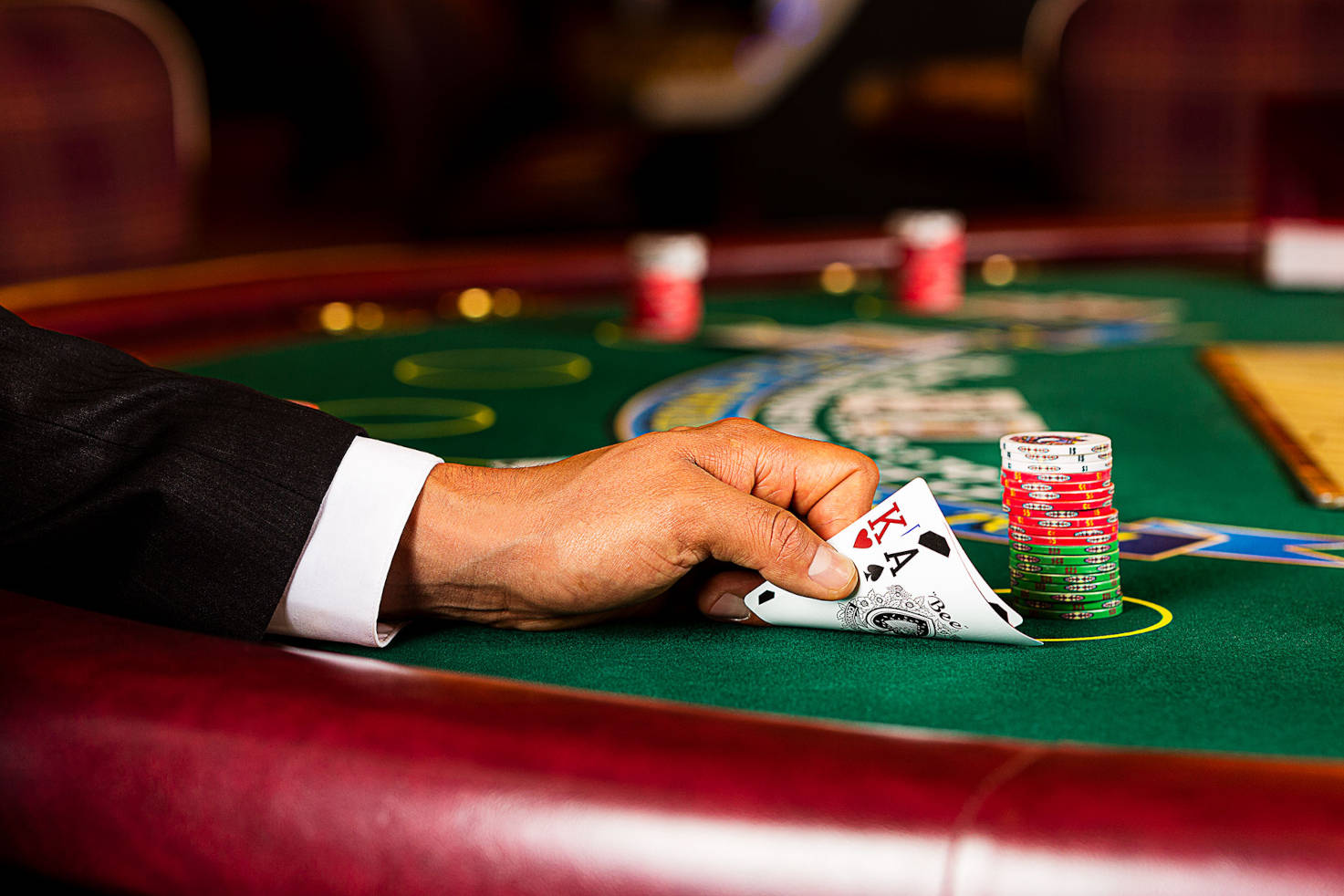
One of the most important pair-splitting rules is simple: never split 10s.
A pair of 10-value cards gives the player a total of 20, which is one of the strongest hands in blackjack. Splitting 10s breaks up a powerful hand and turns it into two uncertain hands. The chance to improve is usually not worth giving up a strong 20.
Players should also be cautious with splitting 5s. A pair of 5s gives the player a total of 10, which is usually a strong doubling hand. Splitting turns that strong 10 into two weaker starting hands.
The broad rule is this: do not split strong made hands, and do not split pairs that are more valuable as a starting total.
Players should generally avoid hitting on hard 17 or higher. A hard hand does not contain an ace counted as 11, so taking another card on hard 17, 18, 19, or 20 creates a high risk of busting.
Hard 20 should almost always stand. It is already one of the best possible totals. Hitting a 20 is one of the clearest blackjack mistakes.
Hard 19 and hard 18 are also strong totals. Basic strategy usually calls for standing because the risk of busting is too high and the hand is already competitive.
Hard 17 can feel less secure, but it is still usually a stand. Hitting hard 17 gives the player only a narrow chance to improve and a large chance to go over 21.
Sky Ute Casino Resort offers blackjack as part of its card and table games lineup in Ignacio, Colorado. The casino floor brings together blackjack, roulette, Three Card Poker, Texas Hold ’Em, slots, bingo, promotions, and Ace’s Club rewards in a lively Four Corners gaming destination.
At Sky Ute Casino Resort in Ignacio, CO, guests can enjoy casino gaming, a variety of exceptional dining options, and luxury hotel rooms and amenities. Bowling, an arcade, mini golf, and on-property entertainment give guests even more ways to enjoy their time beyond the blackjack table.
Plan a visit, review the table rules, choose a comfortable betting level, and enjoy blackjack at Sky Ute Casino Resort.